by Jana Christin Lammerding (Vienna, Research Intern Oxford Hilary Term 2026)
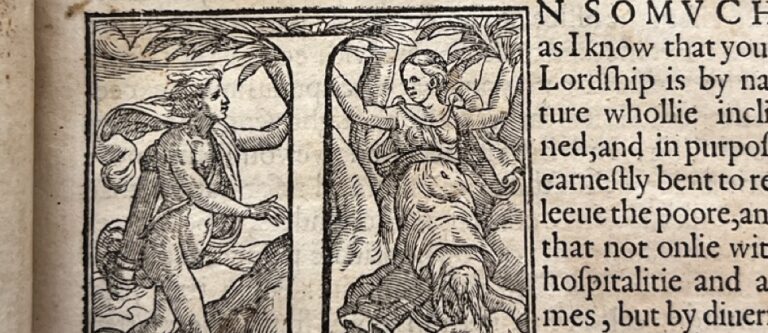
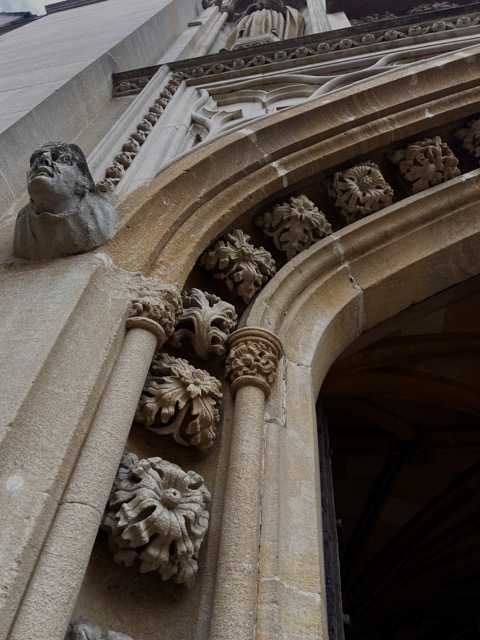
In Oxford, witches are everywhere. They peek out from the windows of tourist shops on Broad Street, screen-printed onto tote bags and dangling from keychains. They fly across the facades of buildings that doubled as Gothic film sets, trailing the memory of film crews and Harry Potter fans who arrive with a map and leave with a wand. They lurk in the Botanic Gardens, where wolfsbane and mandrake have been grown since the seventeenth century. They hide behind gargoyles and devil figures that crouch on college walls and front quads, their grotesque grimaces frozen by masons who took evil seriously enough to chisel it into limestone. And they wait, patient and silent, in the reading rooms of the Bodleian: in the margins of late medieval manuscripts scratched in faded ink by a nervous author, in the woodcuts printed in pamphlets recalling witch trials and confessions, and in the early modern treatises that debated, with deadly seriousness, whether they were real.
As a witchcraft researcher at the University of Vienna, I came to Oxford to encounter the latter. Witches, however, were only part of the story. Because above all, my three months in Oxford turned out to be an immersion into the world of medieval studies and the wonderful community within it, both of which Henrike Lähnemann invited me into, as her research intern for Hilary term 2026. Now that I have returned to my desk in Vienna with a suitcase full of research notes and a dissertation that acquired several new chapters’ worth of complications, I am attempting to put into words an experience that swept me up on a journey into the magical world of Medievalism at Oxford, one book at a time, while finding witches along the way.
M stands for Medievalism, Manuscripts, and Media Studies
When I arrived in Oxford on a rainy Saturday evening in early January, I had two things on my mind: how had I managed to forget my umbrella, and how on earth would a media-cultural scholar like me possibly be able to contribute in a room full of medievalists?
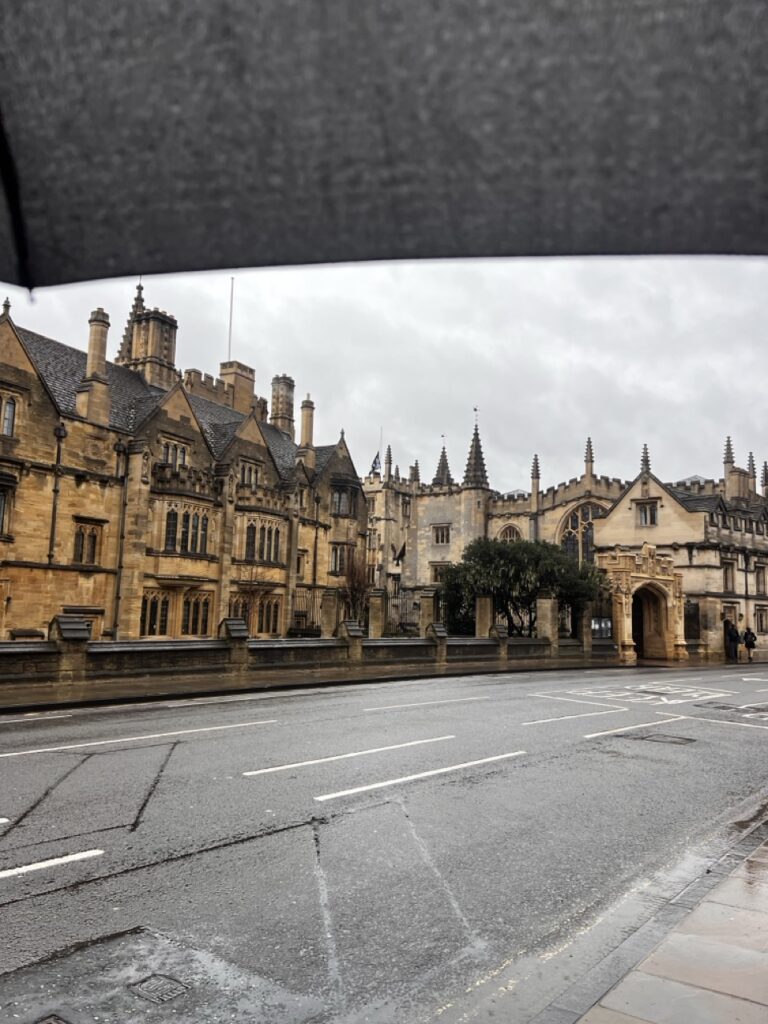
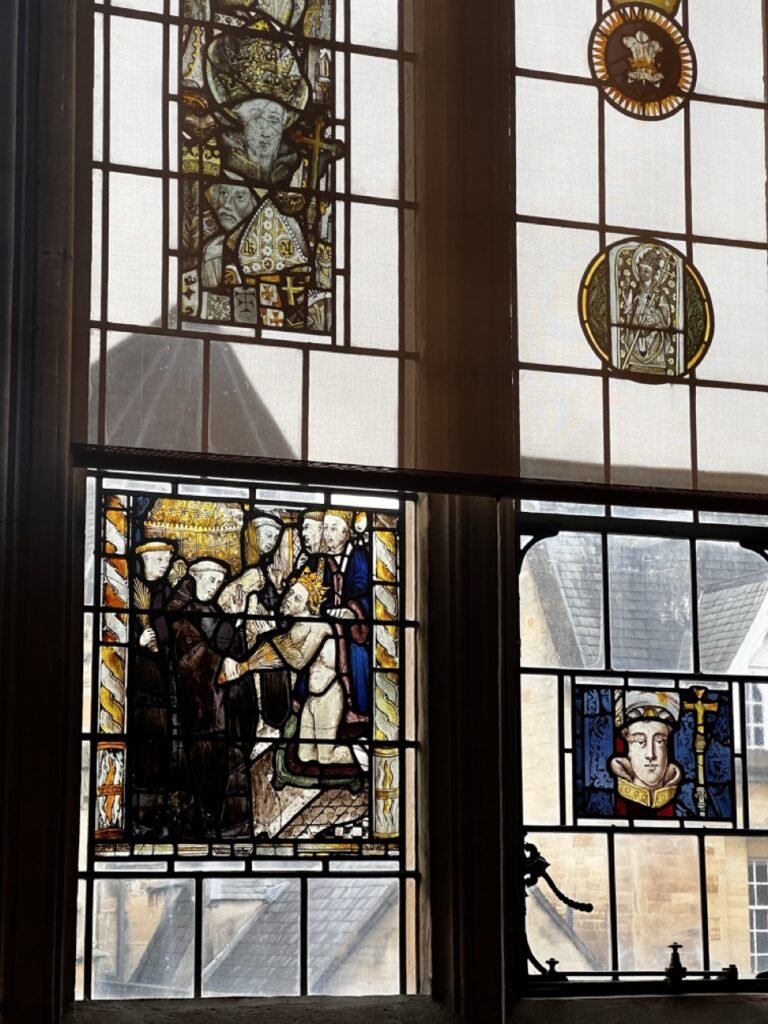
Thankfully, solutions presented themselves rather quickly. By Monday morning I had bought a new umbrella and, thanks to Henrike’s never receding enthusiasm and generosity, found the confidence to simply trust the process. After joining both the weekly Medieval German Graduate Seminar and the DPhil Colloquium at St Edmund Hall, I swiftly found myself surrounded by graduate and postgraduate students whose genuine excitement for medieval manuscript culture was, I can confirm, entirely contagious. I soon learned that what connected everyone was not a shared methodology, research interest, or academic background in the first place, but an unbounded curiosity about what these texts and materials may have revealed to their contemporaries and still continue to reveal, many centuries later. And that, it turned out, was not so far from what I was fascinated by myself. Due to my current research on the epistemology of the witch in reproductive rationalities, I became interested in the hermeneutics of historical literary sources and the production of meaning and knowledge within them. Yet as someone trained primarily in modern cultural and media theory, I was acutely aware of the limits of my own methodological toolkit, which is precisely why I was eager to observe and learn how Medieval Germanists navigate these questions and to consider what their perspective might offer my own research. Fortunately, three months among medievalists proved to be not only an enriching opportunity to learn from and with them, but to also find many dear friends in their midst.
A stands for Architecture, Atmosphere, and Archivists
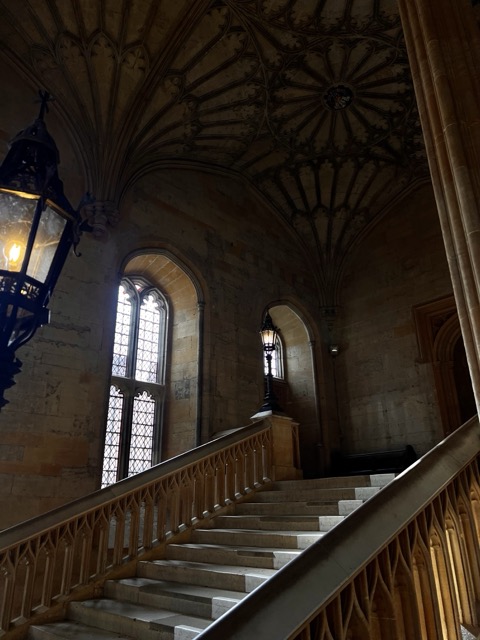
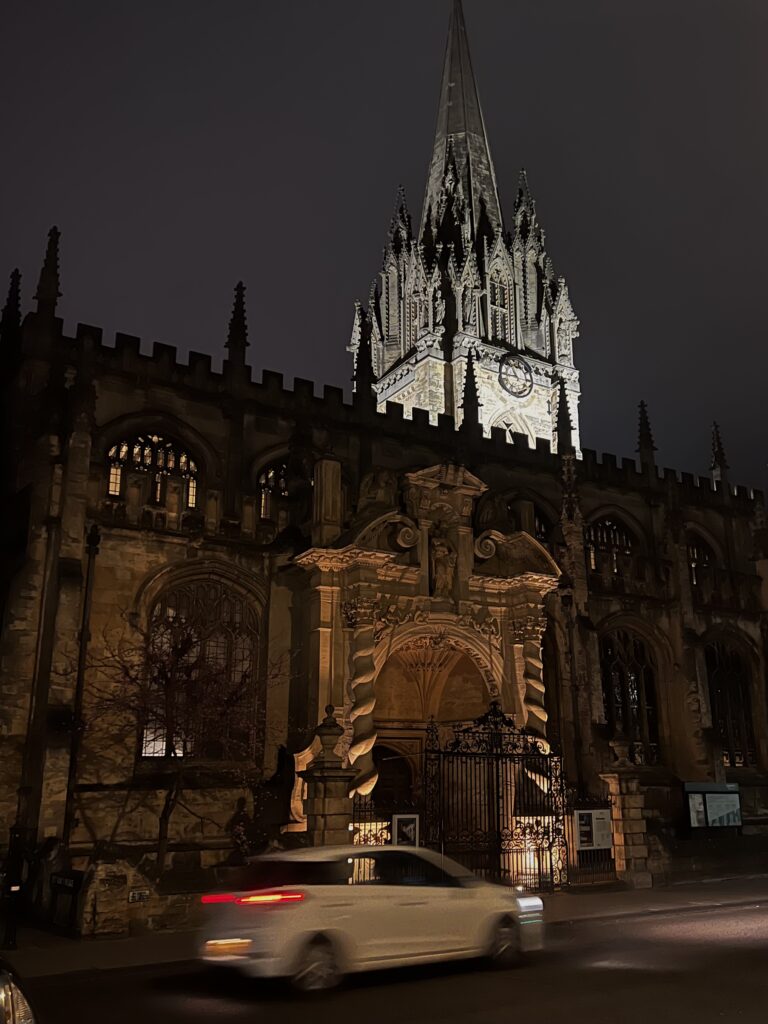
It is well known that Oxford’s architectural aesthetic fully commits to its reputation. Indeed, walking through cobbled streets and hidden passageways, past the walls of medieval colleges and gothic churches, it is easy to see why the city has been cast as the spatial embodiment of what the Internet termed #darkacademia. However, no hashtag quite captures the particular mystical quality that sweeps through the city, especially palpable on a gloomy Sunday evening when fog settles over the ‘dreaming spires’.
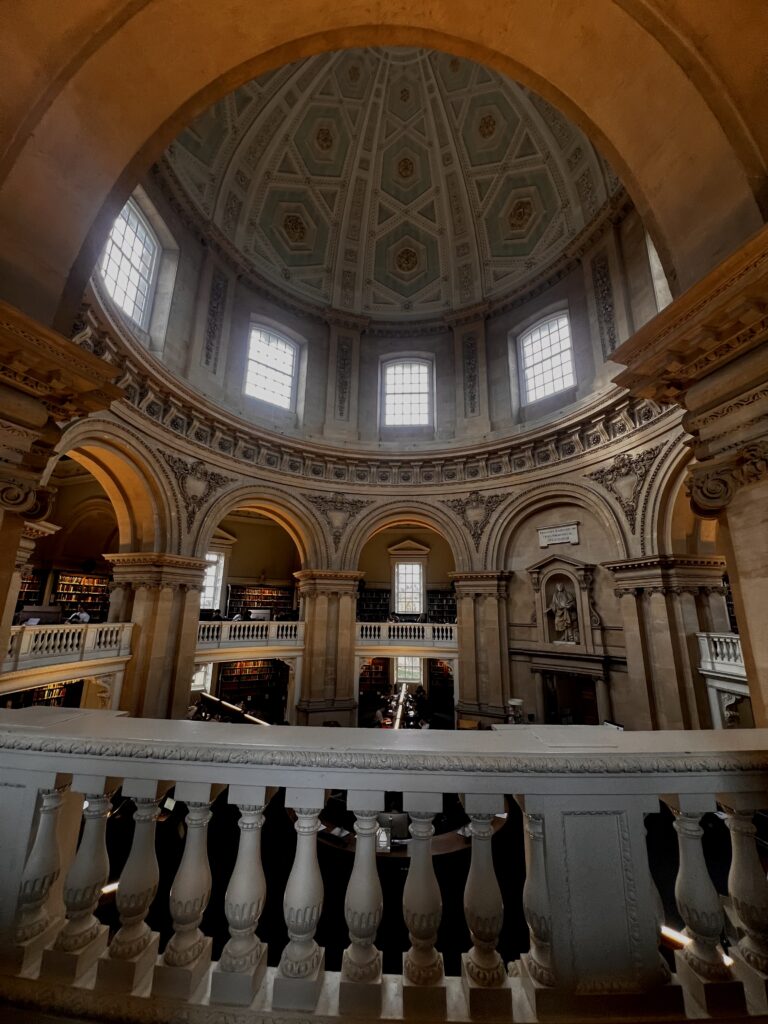
It is a sense of otherworldliness that reaches its apex among the wooden rows of centuries-old volumes lining the Bodleian’s shelves, and that sharpens the moment you open a sixteenth-century witch trial pamphlet for the first time, as I can attest.
During my time in Oxford, I spent a considerable amount of time in the Bodleian libraries’ various reading rooms, preferably those in the Radcliffe Camera and Duke Humfrey Library, where the architecture alone is enough to make any researcher feel, briefly and pleasantly, like a character in a novel. But the library I returned to most was the one that houses the Special Collections and Rare Books, including books on magic and witchcraft, of which the Weston Library certainly had no shortage. Of all the material available, I found myself returning to two names again and again: Douce and Ashmole.
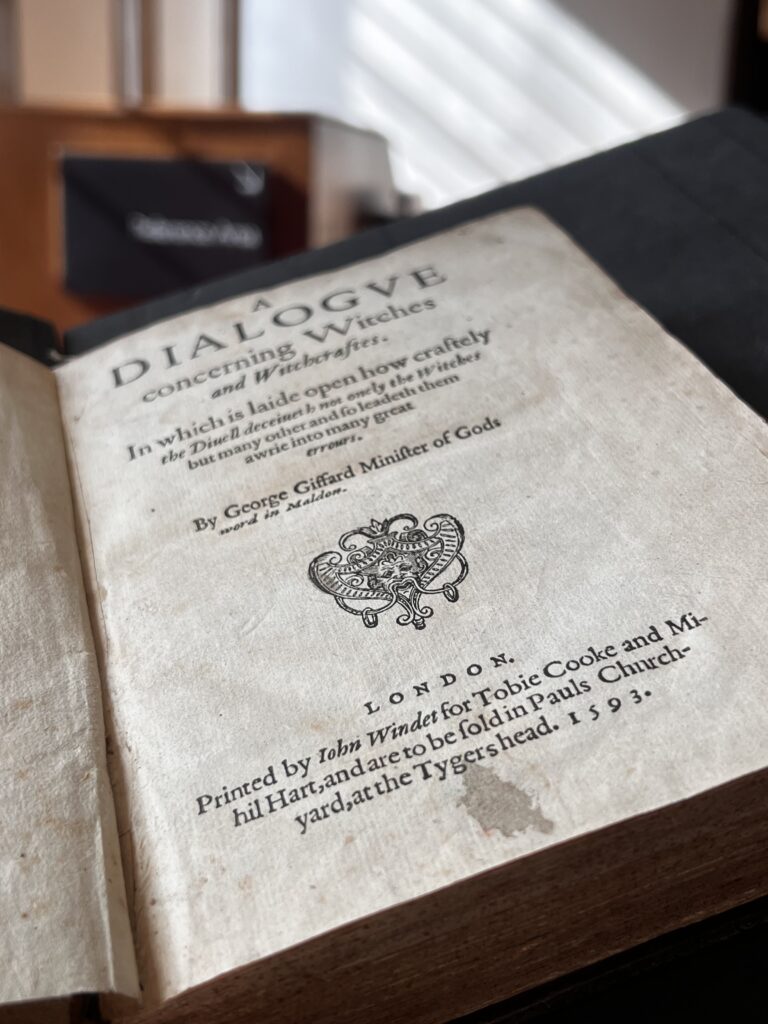
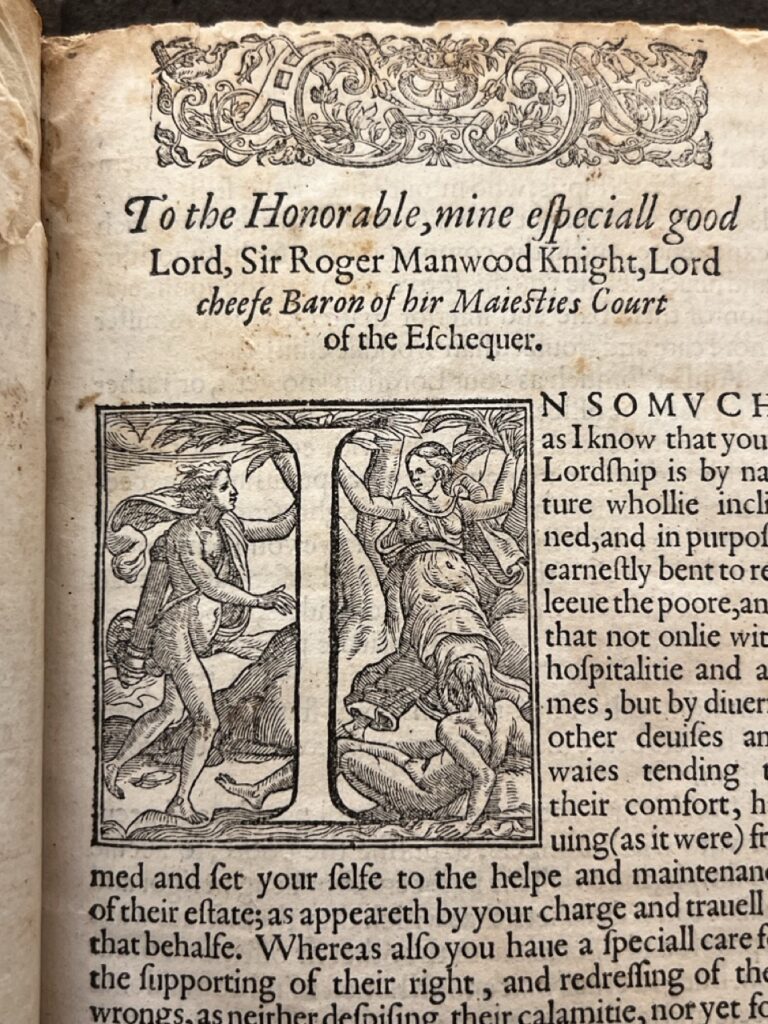
Francis Douce, archivist and keeper of manuscripts at the British Museum, and Elias Ashmole, astrologer, alchemist, and archivist, were separated by a century but shared a scholarly fascination with witchcraft and, especially in the case of Ashmole, the occult. Their collections quickly proved to be something close to a goldmine for my research on witches, as both encompassed a remarkable range of late medieval and early modern material I had previously only known from secondary sources. From the infamous Malleus Maleficarum (Douce SS 115) and trial reports of the Salem (Douce M 409) and Essex witch trials (Douce WW 81), to the quintessential anti-witchcraft treatise by Reginald Scot (Ashm. 549) and the Daemonologie of King James I himself (Ashm. 547 (2)), the collections truly left nothing to be desired and everything to be read. If anything, working through all the material in a few weeks proved, to put it mildly, an ambitious endeavour.
G stands for Gloves, Gowns, and Guidance
The only thing capable of disrupting the seemingly timeless mystical atmosphere Oxford so carefully cultivates is the sight (and sound) of a student in full white tie, the long black gown flapping in the wind, cycling over the cobblestones or rattling past on a Voi scooter, visibly late to a formal dinner. A reminder that the present tense has not entirely loosened its grip on the place.
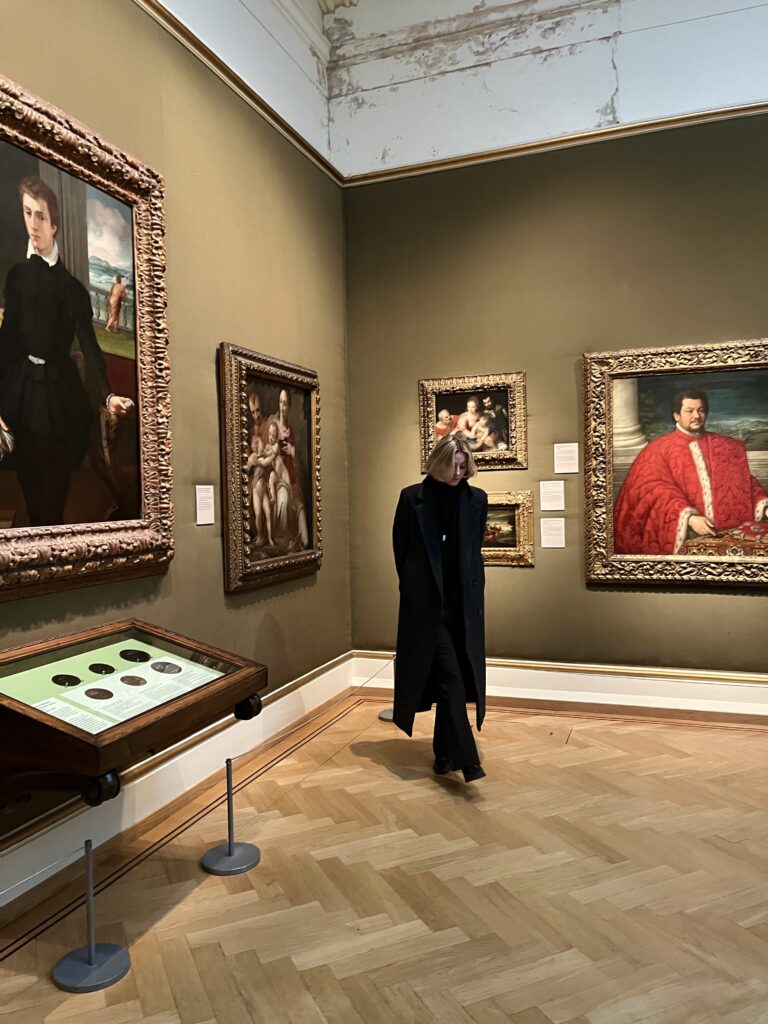
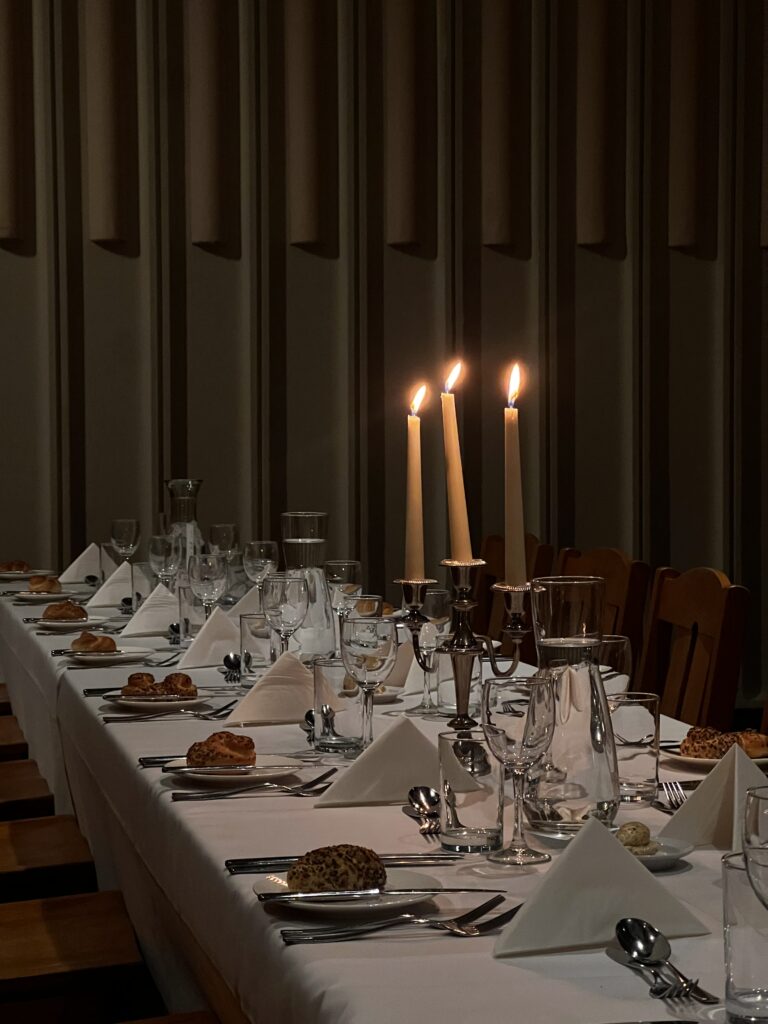
Coming from Vienna, the spiritual capital of opera and elaborate balls, I thought attending and dressing up for formal occasions held no surprises for me. After being invited to my first formal dinner on the High Table, Oxford politely, but firmly, suggested I had more to learn. Navigating the social traditions like the choreography of a formal dinner in one of the grand dining halls or the precise etiquette of an afternoon tea, is an art in itself, and one that benefits greatly from good guidance. Luckily, my colleagues and Henrike ensured that my education began on two equally important fronts, teaching me not only how to identify the correct fork on the dinner table, but how to handle a priceless historical artefact, both of which may require gloves in some cases. As it happens, learning how to handle a medieval water jug during an Object Handling session at the Ashmolean Museum that Henrike allowed me to join in my first week alongside her undergraduate students, turned out to be surprisingly similar to learning how to dance the Viennese waltz: a matter of precision and having enough confidence not to look terrified while doing it.
I stands for Illegibility, Ink, and Intuition
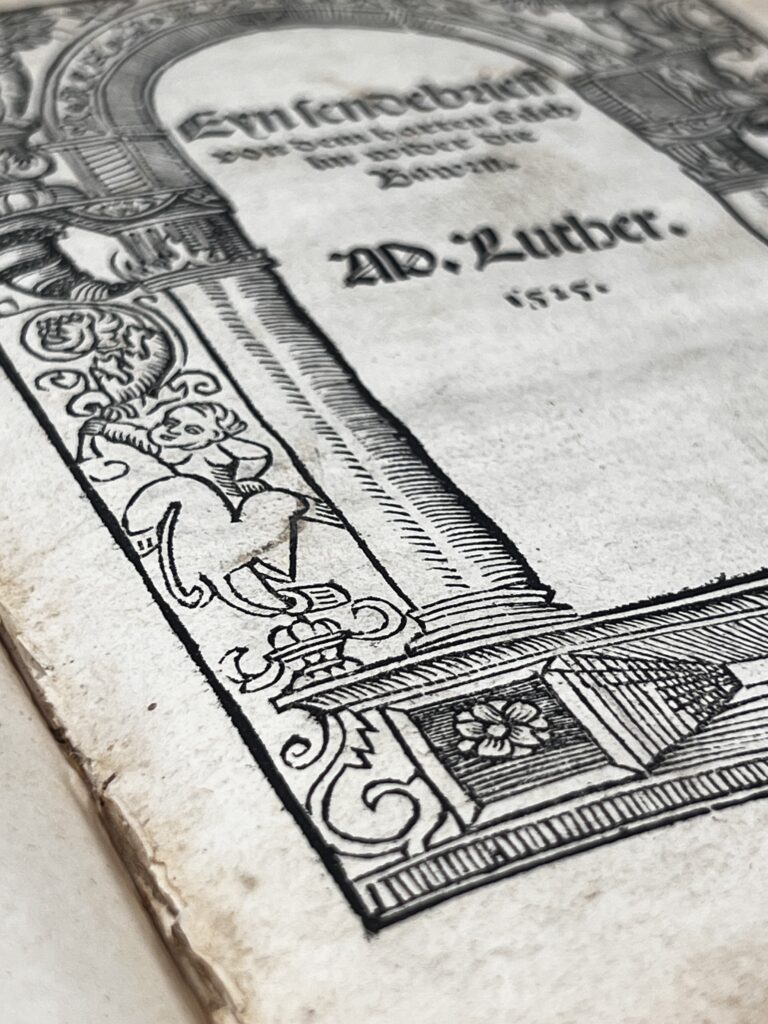
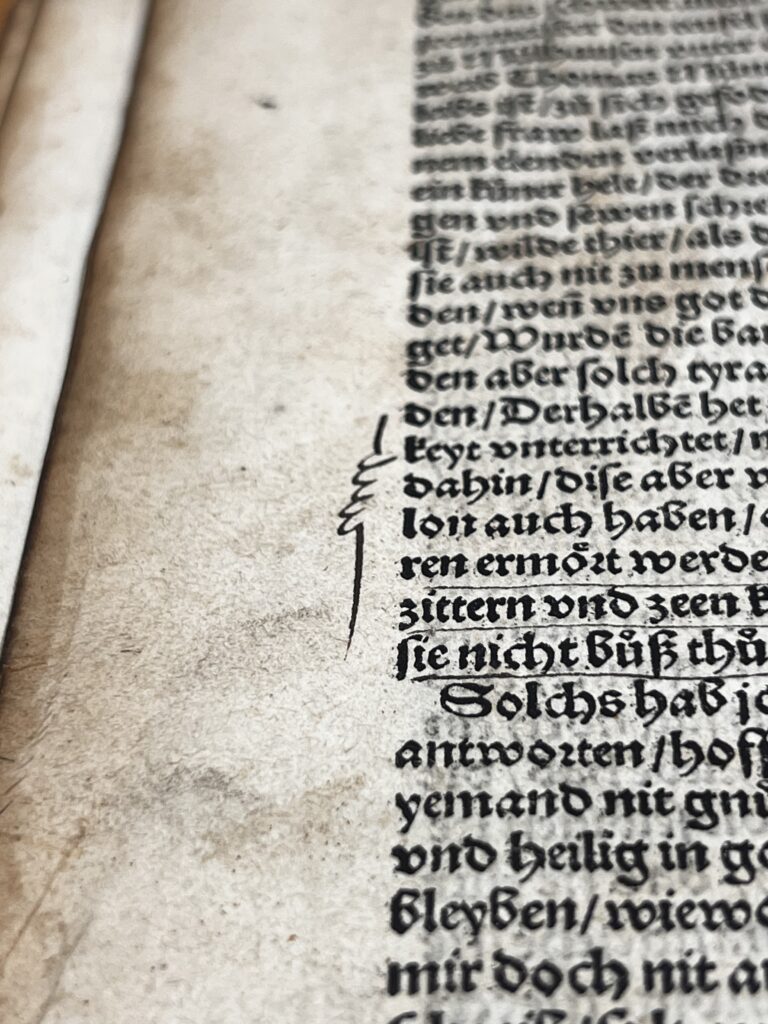
But not all learning opportunities in Oxford involve gowns and gloves. One of my main projects during my stay was the preparation of a digital edition of the Martin Luther pamphlet Eyn ſendebrieff von dem harten buͤchlin wider die Barwn, which required skills I definitely did not arrive with. Before I could even begin working on the text itself, I first had to learn how to read and transcribe material from the early 16th century, a process that quickly taught me patience. After all, early modern German does not give itself up easily: inconsistent spelling, unfamiliar syntax, and extinct letterforms seemed cryptic at first, but got decipherable after I had acquired some basics in Middle High German and took Emma Huber’s Digital Editions course, which walked me through the fundamentals of transcription, encoding, and scholarly editing. What initially seemed impossibly technical gradually became one of the most satisfying parts of my time in Oxford as I watched the pamphlet in front of me, printed in 1525, transform into something digitally accessible for everyone who cares to consult it, soon to be published as part of the Taylor Editions. But there is also a particular satisfaction in seeing my own skills develop, and an even greater one in knowing it came from learning entirely outside my own disciplinary and personal comfort zone.
C stands for Child, Coffee Mornings, and Cowley Road
That process of stepping beyond familiar territory did not remain confined to archives and transcription work. On 13 March — which, as luck would have it, was Friday, the 13th — I had the opportunity to present some of my research as part of the weekly Medievalists Coffee Morning that takes place in the Weston Library’s Visiting Scholars Centre. Focusing on ten selected early modern works on witchcraft collected by Francis Douce, my talk titled The Witch and the Child in the Douce Collection explored the role(s) of children in narratives of witchcraft according to contemporary fears and suspicions, and how early modern literary culture imagined the figure of the child in relation to the figure of the witch. After spending weeks working through archival material in reading rooms on my own, presenting these ideas publicly felt both immensely rewarding and unreal. What stayed with me most after the presentation were the conversations, questions, and enjoyable discussions it sparked, which left me with new ideas and inspiration for my ongoing research on witches back in Vienna.
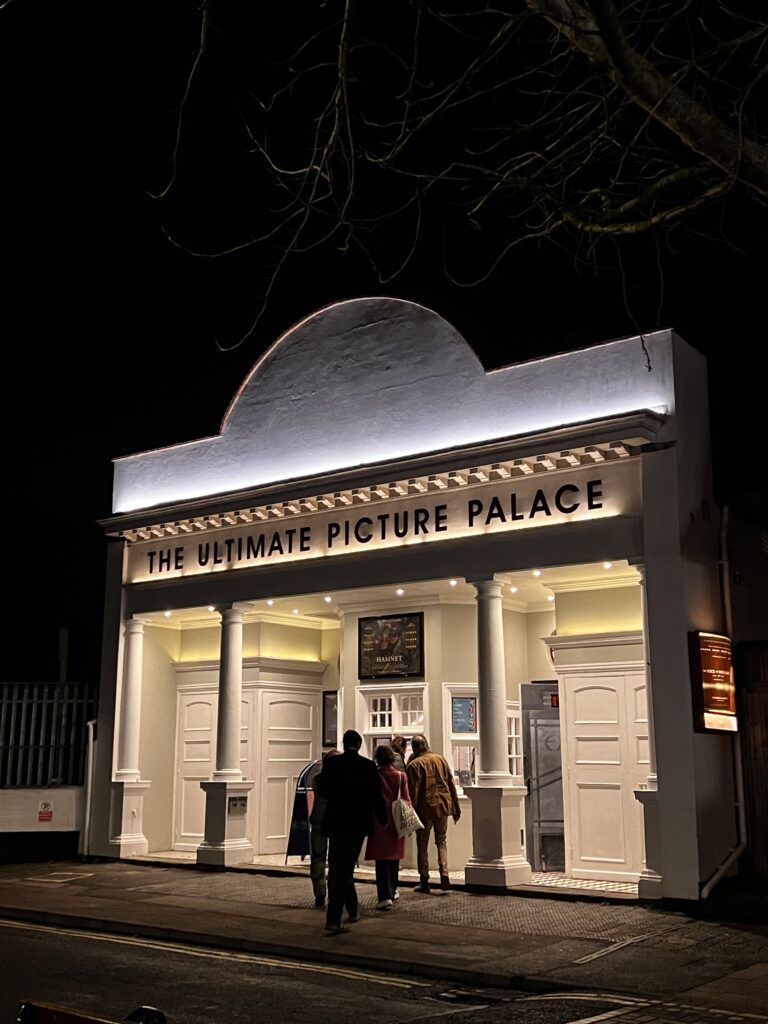
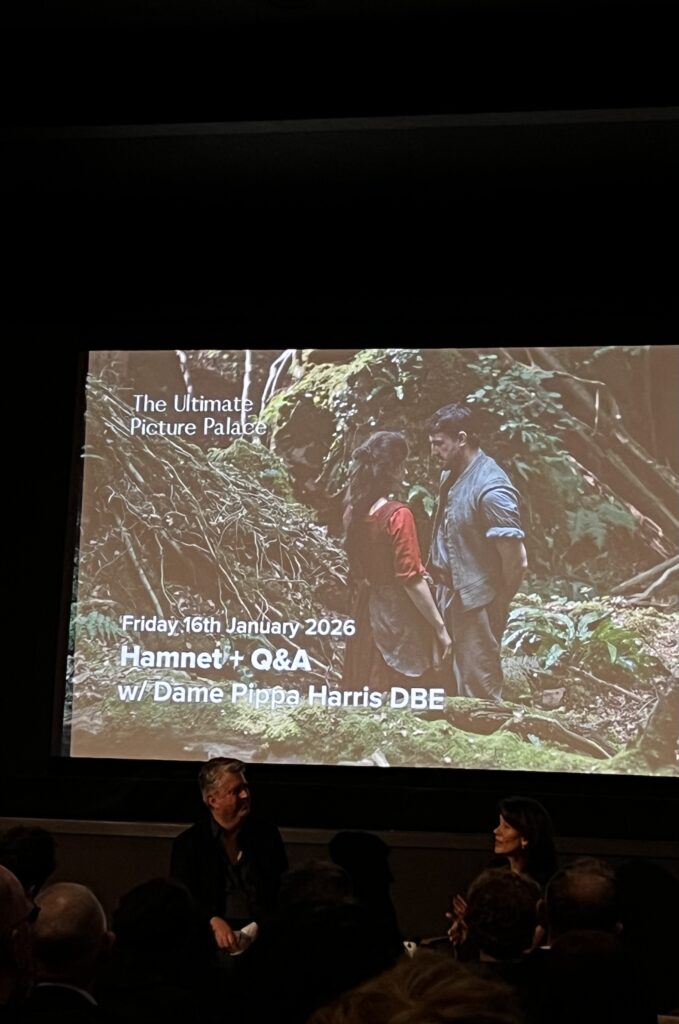
But as I hinted earlier, witches have a remarkable ability to escape Oxford’s archives. On a very cold evening in January, they came to not only inhabit the pages of rare books in the Bodleian, but the silver screen in the city’s most beloved independent movie theatre on Cowley Road, as the Ultimate Picture Palace opened its doors for Dame Pippa Harris and a private screening of her newest movie Hamnet (read my blogpost about the adaptation here). While the adaptation of the popular Maggie O’Farrell novel by the same name is a story about grief, family dynamics, and motherhood, Hamnet simultaneously touches on ideas of witchcraft, as the film engages with young Hamnet’s life and death through the eyes of his mother Agnes. Agnes’ herbal knowledge, healing abilities, and perceived intuitive sensitivity largely place her outside the community, which regards her with suspicion and repeatedly marks her as a witch. Reflecting less the historical realities of early modern witchcraft beliefs than the Romantic era’s literary reinvention of the witch as a wise woman and misunderstood outsider, Agnes’ liminal position enables the movie to draw on specific sociocultural norms of motherhood and womanhood. With such a portrayal, Hamnet provides an opportunity for audiences to critically reflect on what is considered ‘natural’ or ‘ideal’ when it comes to femininity and maternity and, perhaps, to ask the question that guides my own research: What becomes visible about the structures shaping reproduction when viewed through the lens of the witch?
If there is one thing my time in Oxford has taught me, it is that scholarship thrives most where curiosity is allowed to wander a little. The real magic of Oxford lies not simply in its breathtaking architecture or the centuries-old traditions lingering within its walls, but in the way a place like this encourages unexpected connections between disciplines, texts, people, and ideas that create a kind of magic of their own. I hope this report offers at least a small glimpse into the magical encounters that shaped my three months in Oxford, and hopefully reads as an invitation to seek out a little of that magic for yourself. Or, as we say in German when sending someone off with a touch of witchcraft: Hex hex.
Jana Christin Lammerding is a doctoral candidate at the University of Vienna and a lecturer at the Braunschweig University of Art. Her research focuses on media-cultural approaches to historical epistemology, combining media studies with archival research, discourse theory, and cultural historiography. From January to March 2026, she was a visiting researcher/research intern at the University of Oxford, St Edmund Hall, with Henrike Lähnemann.