by Paul Oswalt, German Graduate Exchange Student
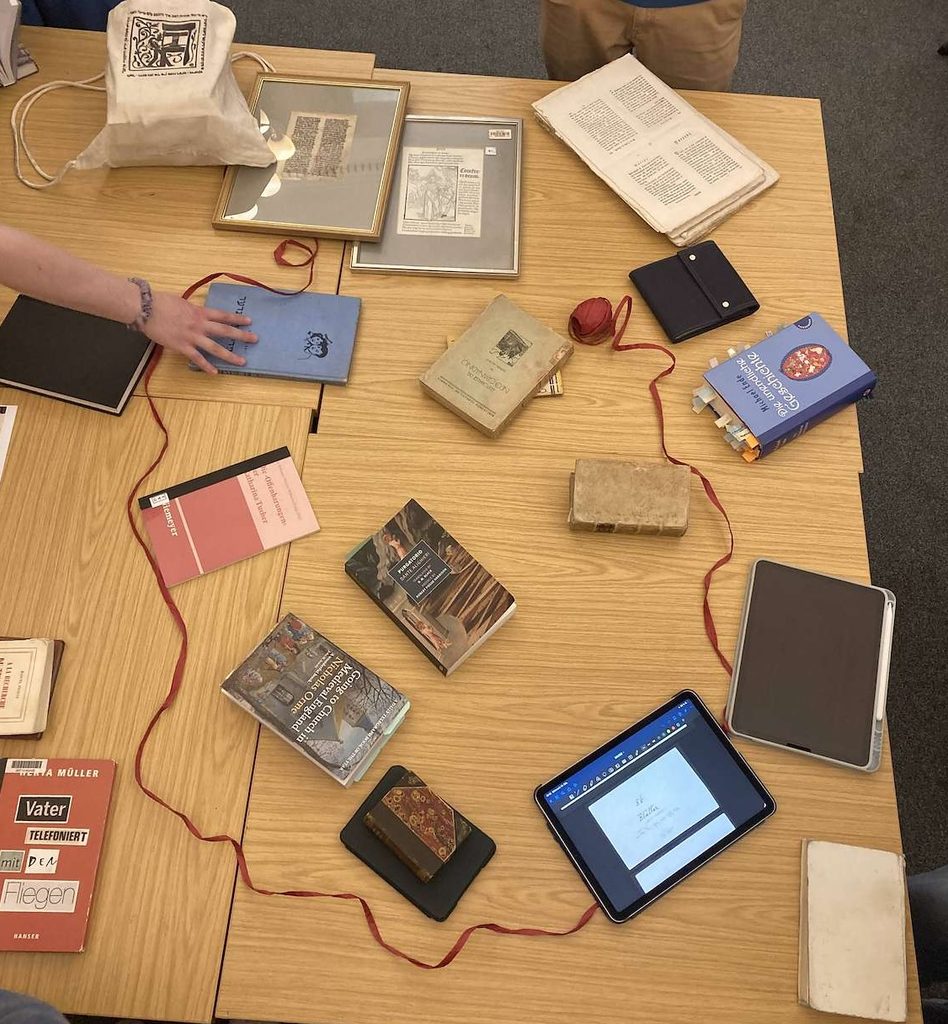
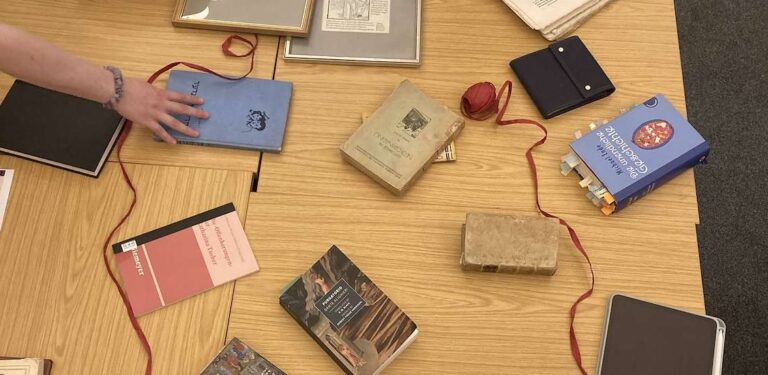
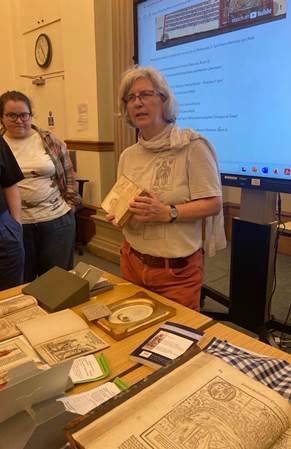
This year’s History of the Books course began, as in previous years, with a “Show and Tell” session. After arranging four tables to create a presentation space, each of us placed in the centre the object we had brought to the session. The simple prompt to “bring a book” allowed for very different interpretations of what might qualify. We examined recently purchased works of secondary literature alongside older-looking volumes that might have come straight from the shelves of the Bodleian’s special collections. There were also several tablets and an e-reader: unmistakable reminders that we were in the twenty-first century.
Presenting our books gave us an opportunity to say a little about ourselves. Inevitably, each of us had a story to tell about the book we had brought. Our examples varied not only in age and material form but also in language, often reflecting the presenter’s first language or field of study. The books included works in Italian, Middle High German, English, Spanish, and Russian. Some students had brought books they had worked on during their undergraduate studies; others had chosen books they had recently purchased for academic reasons or inherited from family members.
Through these stories, we discovered that we came from a range of countries, including the United States, Russia, Germany, and Switzerland. As our books reflected, we studied different modern languages at Oxford, among them German, Italian, Yiddish, and Spanish. Above all, however, we shared an interest in the book as a cultural object and a medium of communication. “Show and Tell” proved to be an excellent opportunity not only to explore our understanding of books but also to get to know our fellow students.
Although the session was enjoyable, it also presented an academic challenge: what, exactly, was a book? Professor Henrike Lähnemann asked us to draw a line between objects we would readily identify as books and those that challenged our assumptions about what could count as one. A red string laid across the table helped us mark this boundary.
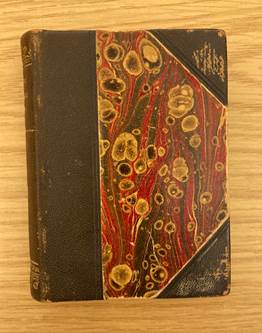
We soon found that deciding where to draw the line was far from straightforward. Different conceptions of the book circulated within the group. One view was that a book necessarily had to be bound, a criterion that most of our examples met. One such object was a nineteenth-century pocket edition of Dante’s Divine Comedy, brought by an Italian student, which was striking for its compact format and leather binding.
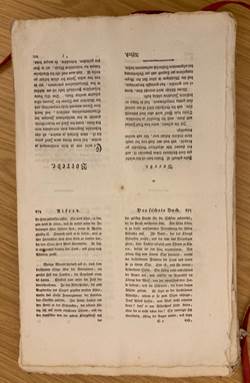
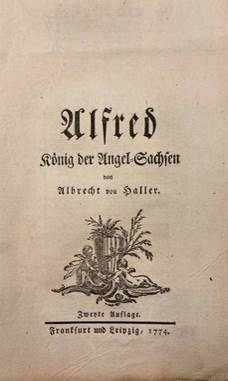
But what about a gathering of printed sheets that had been intended to be bound as a book but never reached that stage because nobody bought it? Henrike Lähnemann showed us a set of printed sheets that at first looked like loose documents. In fact, they formed an edition of “Alfred, König der Angel-Sachsen”, a German story about a king who falls in love. Published in 1774, Albrecht von Haller had had to pay for his novel to be printed. As Henrike explained, texts at the time were commonly printed and sold as folded sheets that could subsequently be bound by a professional bookbinder. Copies that remained unsold could therefore survive as gatherings of unbound sheets. Von Haller’s “Alfred, König der Angel-Sachsen” evidently did not become much of a bestseller, and our copy never made its way to the bookbinder.
According to our earlier definition, which required a book to be bound, this object was not a book. Yet it was a text intended to become a book whose material production had never been completed. This raised a further question: should the intention of the author or publisher influence what we understood to be a book?
What, then, about books made from texts that had never been intended to form part of a book? One student presented a copy of Herta Müller’s “Vater telefoniert mit den Fliegen”, first published by Hanser in Munich in 2012. The work consisted of collages assembled from newspaper snippets, which Müller, the 2009 Nobel laureate, arranged into rhyming compositions. The newspapers had certainly not envisaged their texts becoming parts of books. Did the newspaper snippets themselves constitute the text of the book, or was it the collage created from them that ultimately formed the text?
Our presentations thus developed into a productive discussion of different aspects of the book. Fortunately, we have got the rest of the year in which to pursue these questions together. As the initial exercise suggested, we might not have been able to draw a clear red line between what was and was not a book, but we could discern a “roter Faden” — a common thread — connecting these questions and the objects we had brought to the session.
Finally, Henrike showed us some of the treasures of the Bodleian Libraries: books remarkable for their materiality and age, but also for their contents and the research they had inspired. Handling them with due care, as the books required special treatment, we examined a coloured print from a Reformation pamphlet by Hans Sachs. Henrike then showed us a particularly unusual treasure from the library: a lock of Johann Wolfgang von Goethe’s hair, cut from the poet’s head in 1823. These objects demonstrated the many opportunities the collections offered for pursuing questions about books and their histories.
When the session ended, we left the room enthusiastically discussing our various impressions. The programme for the coming weeks gave us much to look forward to, and we were particularly eager to get our hands on the historic printing presses in the Bodleian’s workshop in week 7.